

Nutraceutical & Pharmaceutical Label Printing Solutions

Keeping labels current gets harder as product lines grow. A formula changes, a private-label customer needs new artwork, or a different market requires another version, and suddenly the labels already on the shelf may no longer fit the job.

Afinia Label printers let your team produce approved color labels when they are needed, in the quantities the production run requires. That means less waiting on preprinted rolls and less inventory tied up in labels that may become outdated.

Keep Label Production Moving as Products and Requirements Change

Preprinted labels work well when a product stays the same. The challenge comes when artwork changes, a customer needs its own version, or production needs a smaller run than your label supplier wants to produce. That is when minimum orders, lead times, and leftover inventory start getting expensive.

Printing in house gives production more control over when approved labels are produced and how many are printed. Teams can move from one SKU or customer job to the next without waiting for another shipment, while existing artwork approval, quality-control, and regulatory-review processes stay in place.

Print the Quantity the Job Requires

Run a new product, test a smaller batch, or produce a customer-specific version without committing to a full roll of preprinted labels.

Add Variable Production Data

Include approved lot numbers, dates, barcodes, 2D codes, and other changing data within the label-printing workflow.

Move Between Customer Jobs More Easily

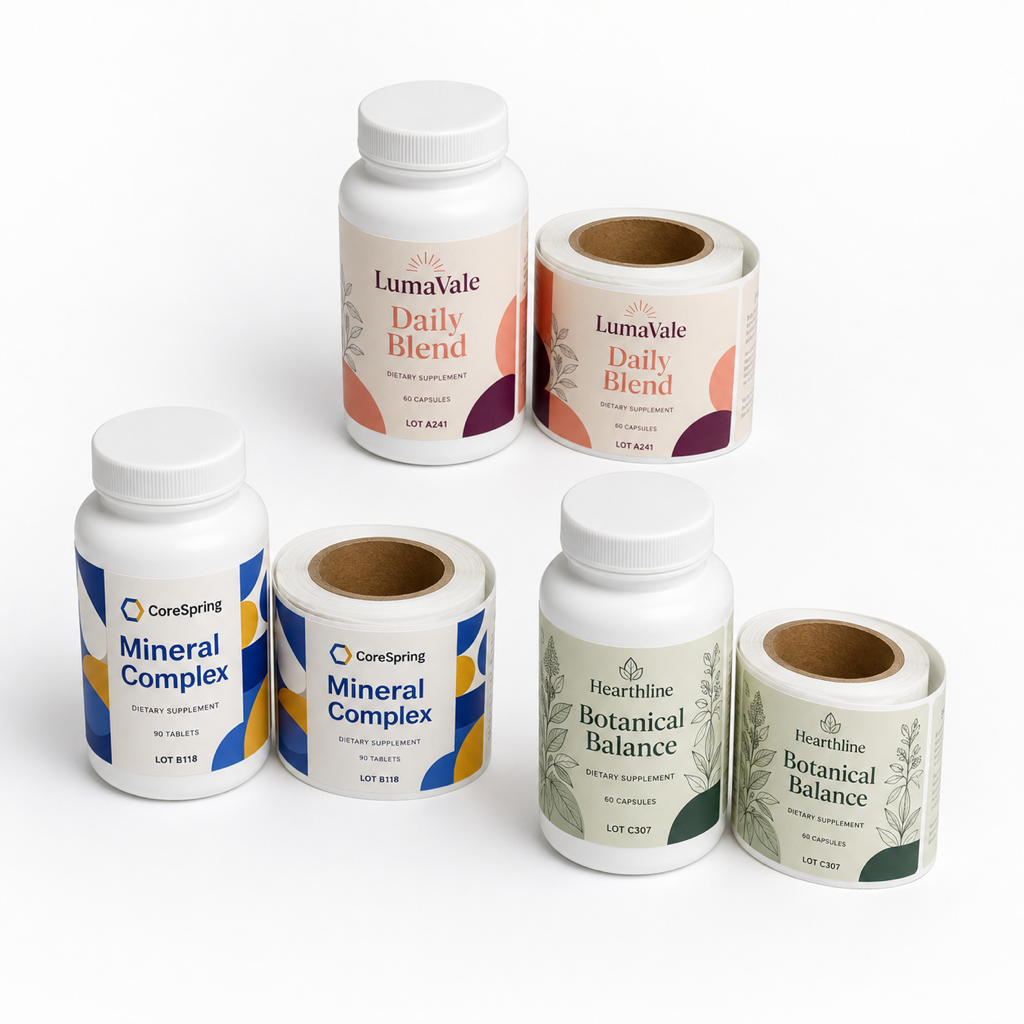
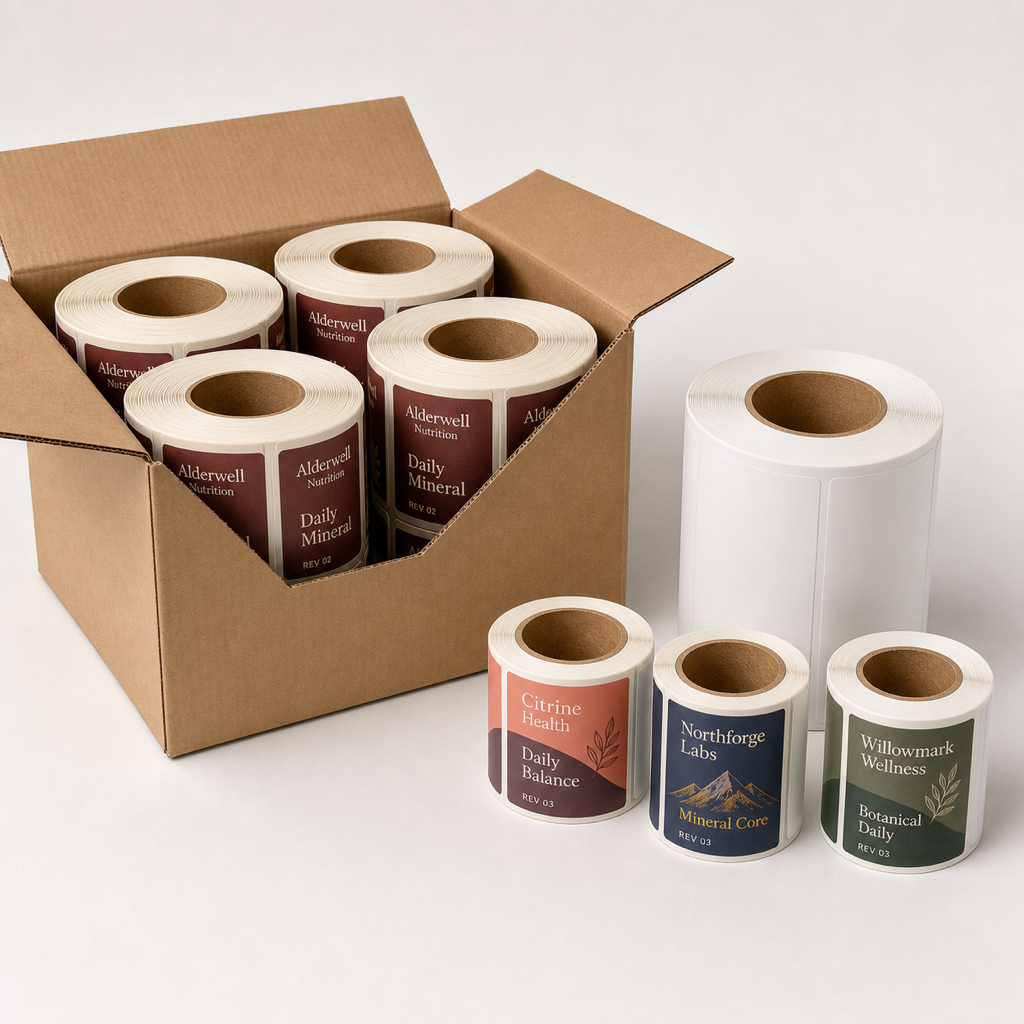
Print different customer brands and product versions from the same inventory of blank label stock instead of keeping a separate preprinted roll for every account.

Common Nutraceutical & Pharmaceutical Labeling Applications

From retail supplement bottles to small vials and information-heavy cartons, the label needs to fit both the package and the production workflow. Afinia systems can support a wide range of color label applications, but the final printer, material, adhesive, and setup should always be tested with the actual package and artwork.

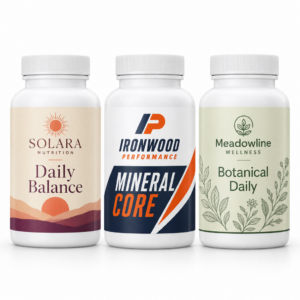
Supplement Bottle & Jar Labels

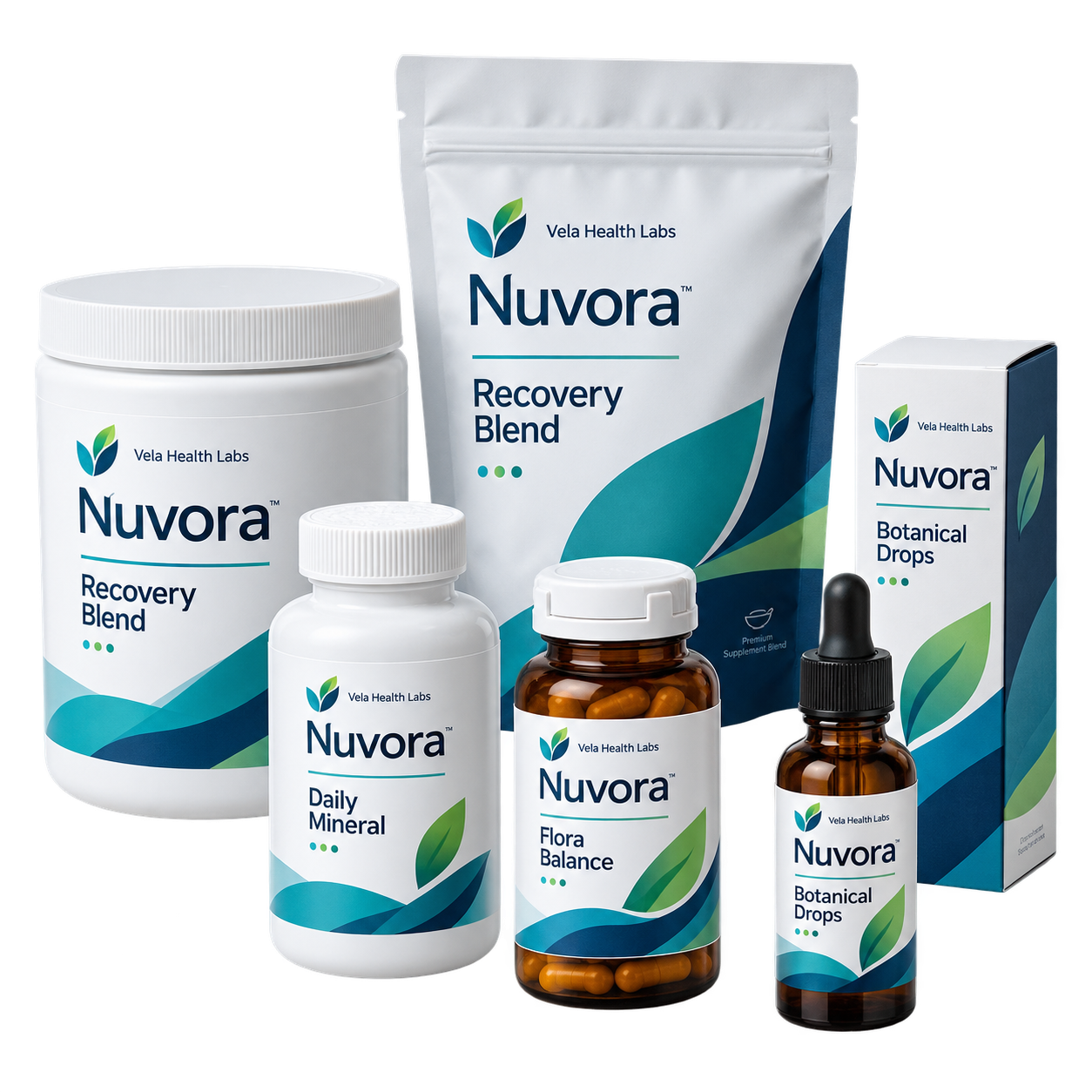
Create coordinated labels across vitamins, gummies, powders, and other supplement products.

Vial & Small-Container Labels

Print compact labels with sharp product identification, strength or concentration fields, and variable production data.

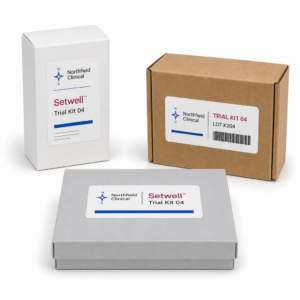
Carton, Kit & Secondary Packaging

Label folding cartons, kits, sample packs, and outer packaging with coordinated branding and product information.

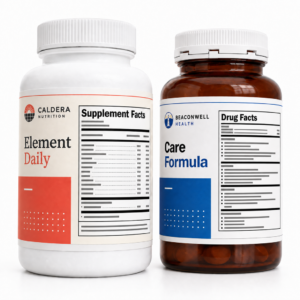
Supplement Facts & Drug Facts Labels

Reproduce approved information-dense panels with crisp text, defined hierarchy, and strong contrast on the chosen material.

Private-Label & Multi-SKU Production

Switch between customer brands and product versions without dedicating a preprinted label roll to every SKU.

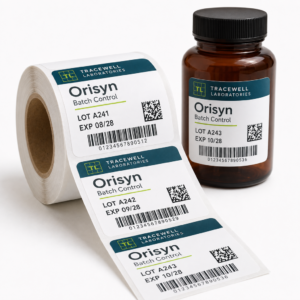
Lot, Date & Barcode Variations

Print approved lot or batch numbers, expiration or best-by dates when applicable, and linear or 2D codes as variable fields.

Move from Printed Rolls to Consistently Labeled Bottles

Printing labels in house solves the supply problem, but at higher volumes hand application can become the next bottleneck. Crooked labels, trapped air, or inconsistent front-and-back spacing create rework and slow the packaging line.

For compatible cylindrical containers, the Afinia A200 semi-automatic applicator can apply one or two roll labels by button or foot pedal. It helps operators place labels more consistently while reducing repetitive hand application. Confirm container and label dimensions before selecting an applicator.

Choose Label Materials for the Container and Environment

The printer is only one part of a successful label. The material, adhesive, and print technology also need to work with the container and the environment it will encounter. A dry carton can have very different requirements from a bottle exposed to moisture or frequent handling. Test the complete label on the actual package before approving it for production.

Key Label Material and Finish Considerations:

Paper for Dry, Controlled-Use Packaging

Matte or gloss paper can be a cost-conscious choice for cartons and containers that remain dry and receive routine indoor handling.

BOPP and Synthetic Stocks for Added Durability

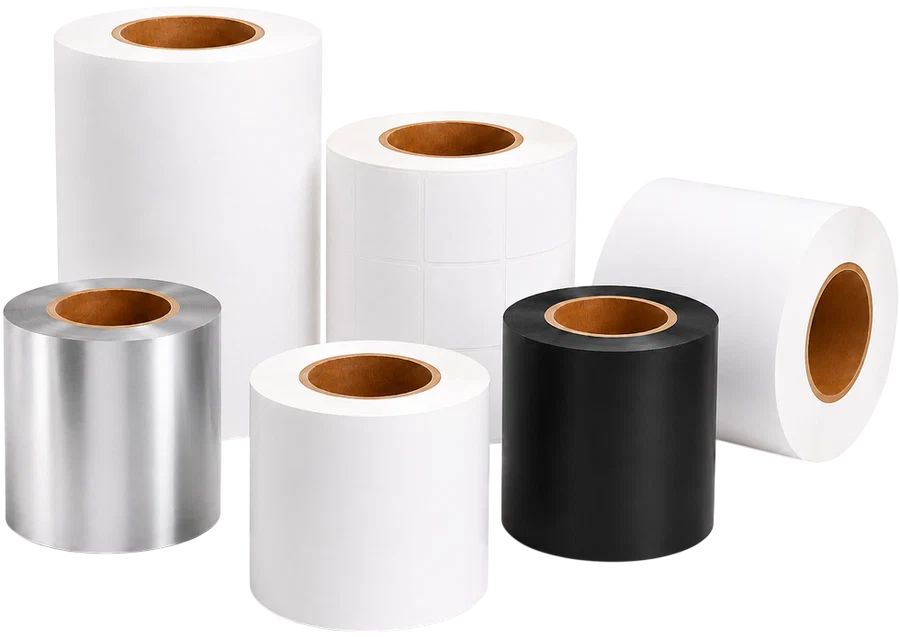
When labels may see moisture, oils, condensation, shipping friction, or frequent handling, BOPP and other synthetic stocks are often better candidates than paper.

Validate Adhesion, Finish, and Scan Performance

A label also has to stay put and remain readable. Test adhesion on the actual container, then confirm that text, barcodes, and the printed surface hold up under the expected storage and handling conditions.

Outsourced vs. In-House Label Printing

For stable products printed in large quantities, outsourced labels can make perfect sense. The economics change when you are constantly ordering smaller runs, managing customer-specific versions, or replacing labels after an approved artwork change. In-house printing gives you another option: keep blank material on hand and produce the finished version closer to the packaging schedule.

Outsourced Labels

Supplier production and shipping lead times

Minimum order quantities

Separate inventory by SKU, market, or customer

Change fees, rush charges, and reorder coordination

Obsolescence after approved revisions

In-House Label Printing

Print approved quantities on demand

Switch among SKUs, customers, sizes, and languages

Add approved variable batch and date data

Control timing closer to packaging

Reduce obsolete preprinted label inventory

See Your Labels Before You Commit

Send us your artwork along with some basic information about the package, label size, production volume, and how the finished product will be stored or handled. We’ll print a real sample, estimate ink or toner cost, and help you evaluate the right printer, material, and application workflow.

No obligation. Real printed samples. Real conversations.

Frequently Asked Questions

Yes. Afinia color label printers can produce approved labels on demand for common supplement and pharmaceutical packaging, including bottles, jars, vials, cartons, and pouches. This is especially useful for short runs, multiple SKUs, private-label work, and frequent revisions. The responsible company still controls label approval, data accuracy, testing, and regulatory compliance.

See Your Label Before You Choose a Printer

Send us your artwork and package details and we’ll produce a real printed sample and cost analysis. A label specialist can then help you compare the printer, material, and application setup that best fits your production workflow.

Flexibility to adapt to government regulations

Some of the challenges that come with labeling nutraceutical and pharmaceutical products are the increasing changes to label requirements. Whether it be new symbols or updated medical information, you need to stay up-to-date and compliant with the regulations. Having an in-house label printer machine gives you the adaptability and flexibility you need in order to stay on top of the demands of your business.

Avoid production delays and expenses

Outsourcing your labels can take weeks to be delivered and it will leave you with fewer opportunities to make changes to your design. Purchasing labels are one thing, but you may also have to take into consideration the loss that production delays will impact your business with clients or customers. These are the expenses that can go far beyond just the cost of the label.

When you have a label printer on-site, you can design, modify, and print your label on the same day. It completely eliminates the stress of meeting minimum orders, expensive purchasing rates, and shipping fees. Printing in-house is cost-effective and will prevent you from wasting labels.

Ability to print labels for multiple packaging

Printing labels on-site for primary and secondary packaging can help you maintain an organized inventory. It also gives the ability to print same-day labels for products imported or exported.

Maintain legible product information

Creating labels in-house can help to include all the required information but still maintain legibility for the consumer.

Ability to take care of issues as they come

The opportunities that in-house printing include being able to save time, save money, and reduce waste. By printing your own labels you can create clean and professional labels that are easy to modify. With your own label printer, you can design and create labels for different types of packaging that your products require.

This site is registered on wpml.org as a development site. Switch to a production site key to remove this banner.